We flew up to Victoria Falls, Zimbabwe, and crossed the Zambesi River into Zambia to reach the Waterberry Zambesi River Lodge, where we booked in to stay. It took almost two hours to reach the camp, where we slept in semi-permanent tents, because we needed to cross the border between the nations. The only bridge here, within sight of the falls, was built in England and brought in pieces to be assembled on site in 1905. It is a single lane bridge with a train track; however, it has a thirty-ton weight limit which requires only one vehicle on it at a time. Officials have been discussing a new truck bridge about five kilometers away, for a long time because Zimbabwe wants Zambia to pay for it. The trucks waiting to cross were backed up more than a mile on the Zambia side. Our driver told us the trucks often wait as much as two days to cross.
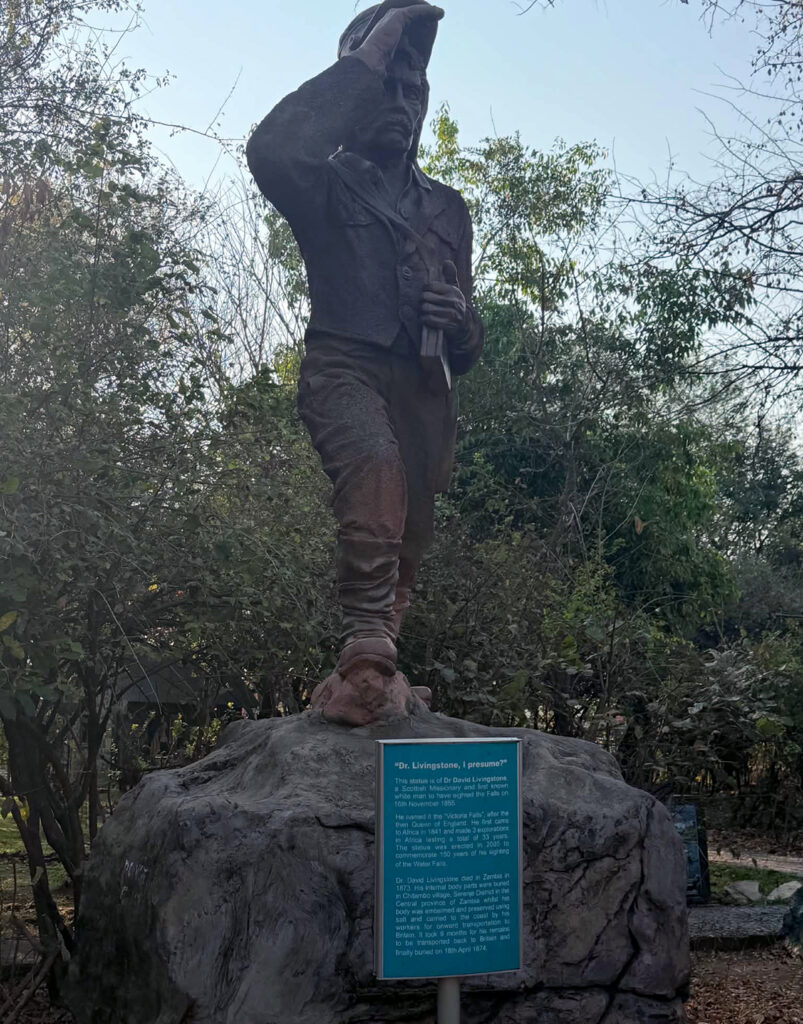
On the Zambia side is the city of Livingstone, named after Dr. Robert Livingstone who explored the region for England between 1851 and 1873, eventually settling and dying here. Practically everything in the city is named after him. We learned that Livingstone did not want to come to Africa, studying to be a missionary to Asia, but he was asked to look for a river that could transport goods from Cairo to South Africa. Victoria Falls stopped his search and frustrated the goal.
We also learned that the entire region had been Rhodesia, named after Cecil Rhodes, who owned the Kimberly diamond mines and most of the gold production in the Johannesburg area. While the English stripped the land of wealth, the locals were grateful for a common language (English) which for the first time allowed the hundreds of tribes in the area to communicate, rather than just kill each other. However, starting in 1964, Malawi and Zambia gained independence from the United Kingdom. In 1980, what was formerly Southern Rhodesia changed its name to Zimbabwe and became independent.
When we visited Victoria Falls, we discovered a World War I monument. It was noteworthy that it listed the three dozen British soldiers who died fighting the Germans in that area. It had a one line note that they did not record the names of the natives who fought by their sides, and clearly died in much larger numbers.
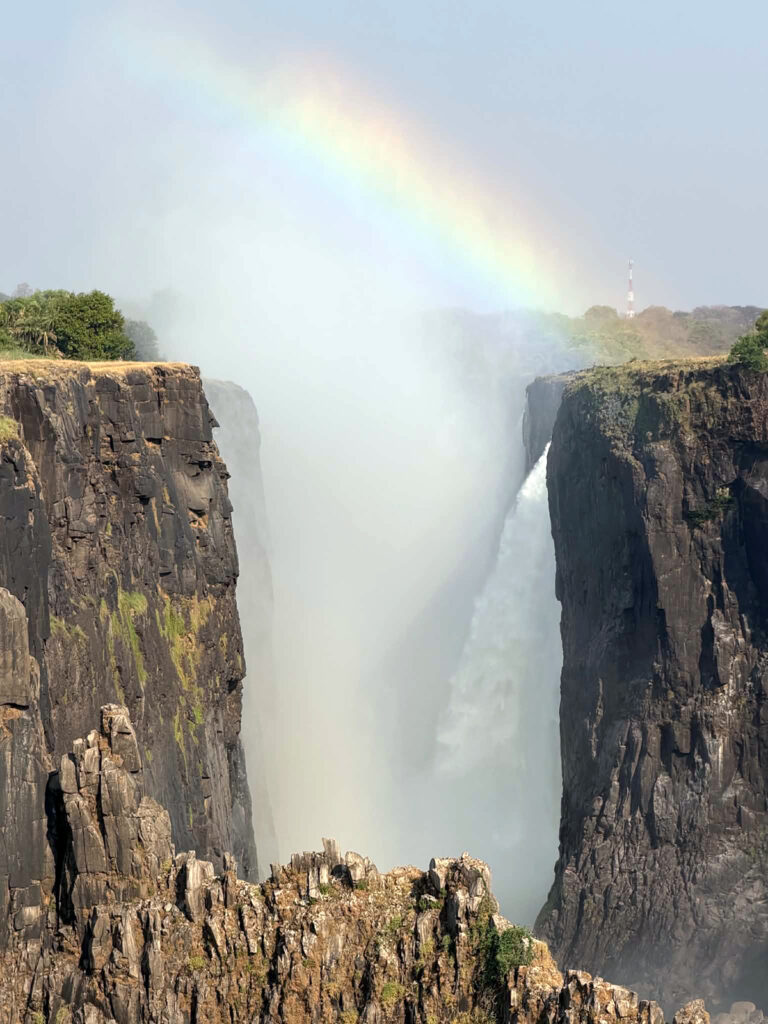
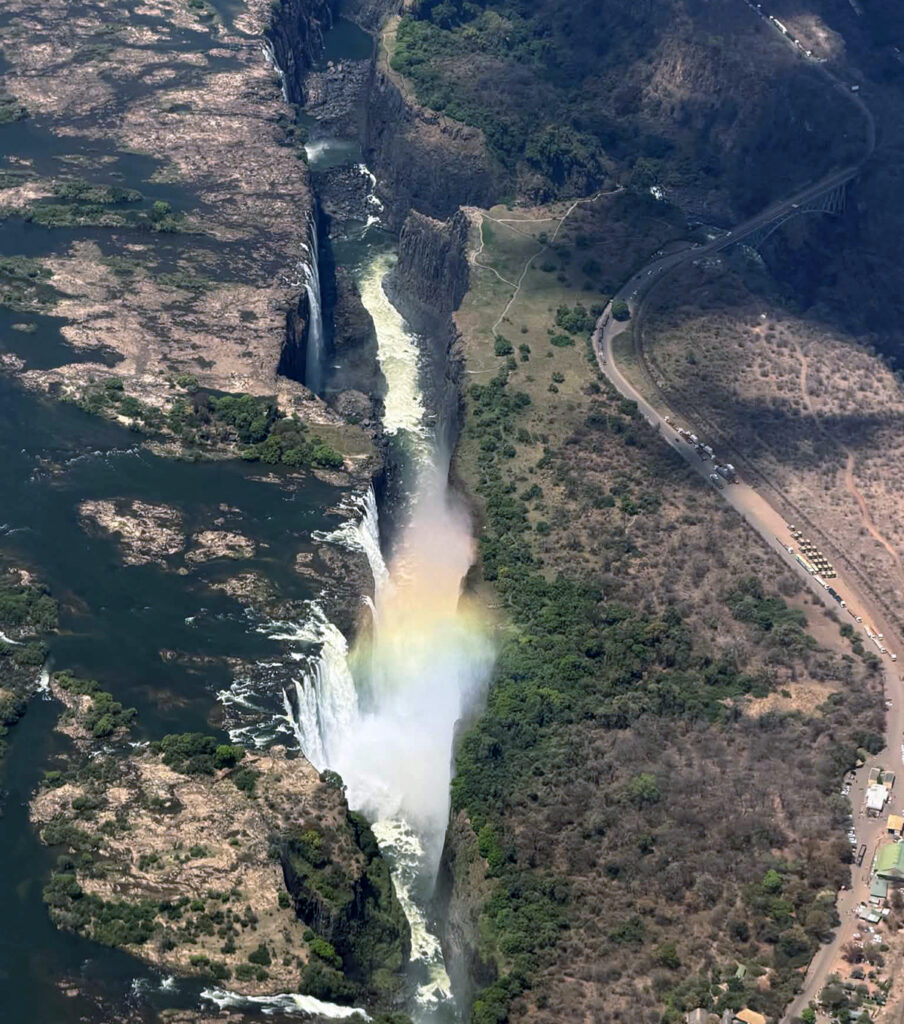
The falls were fascinating. We had been to Iguazu Falls in Brazil and Argentina last spring. It was one of the longest falls in the world at 2.7 kilometers. Victoria Falls is one of the tallest at 125 meters. Curious to me is that Victoria is in a narrow canyon which is only between 25 and 75 meters across. Having grown up in Niagara Falls, that river is very wide and the falls can be seen from more than a mile away. Here you must walk into the top of the canyon to be able to see it. Since the falls are on the Zambia side, the best views are from Zimbabwe, but the border crossing hassles make it difficult to move back and forth across. We chose to just visit from the Zambia side, going out on a point that did not let us get a direct view of the major falls. We were there in September, which is the heart of the drought. In the spring the water gushes almost along the entire mile of river frontage. In fact, the guide mentioned that raincoats are needed in the spring for much of the area we traversed.
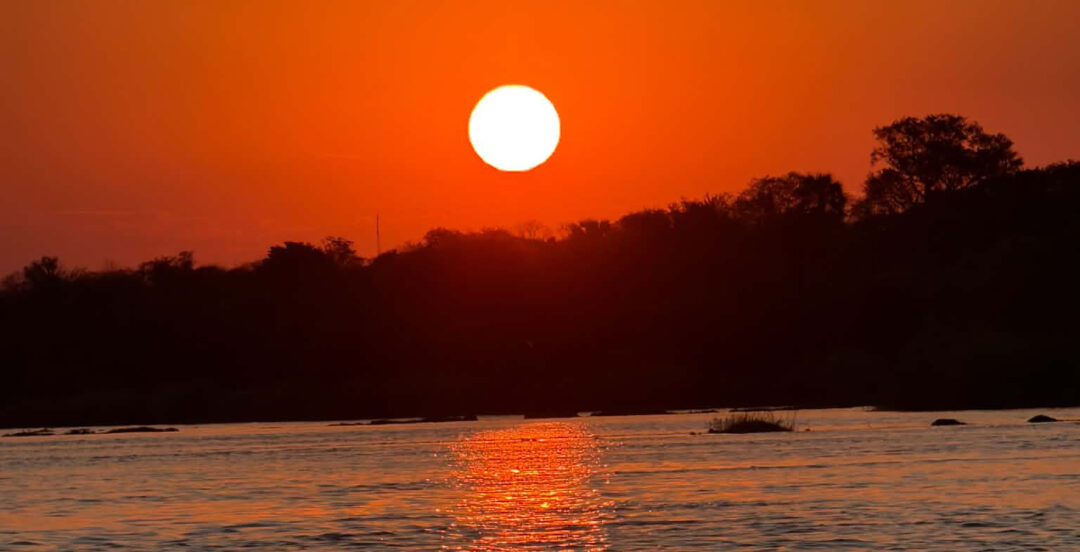
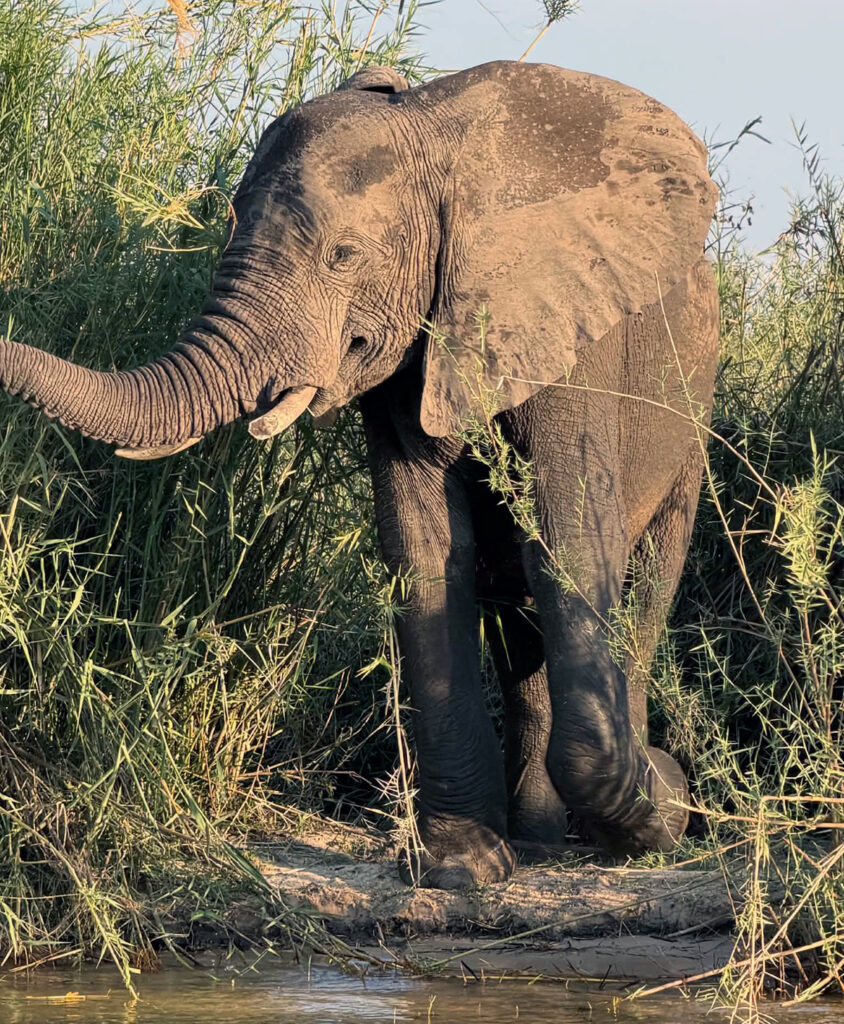
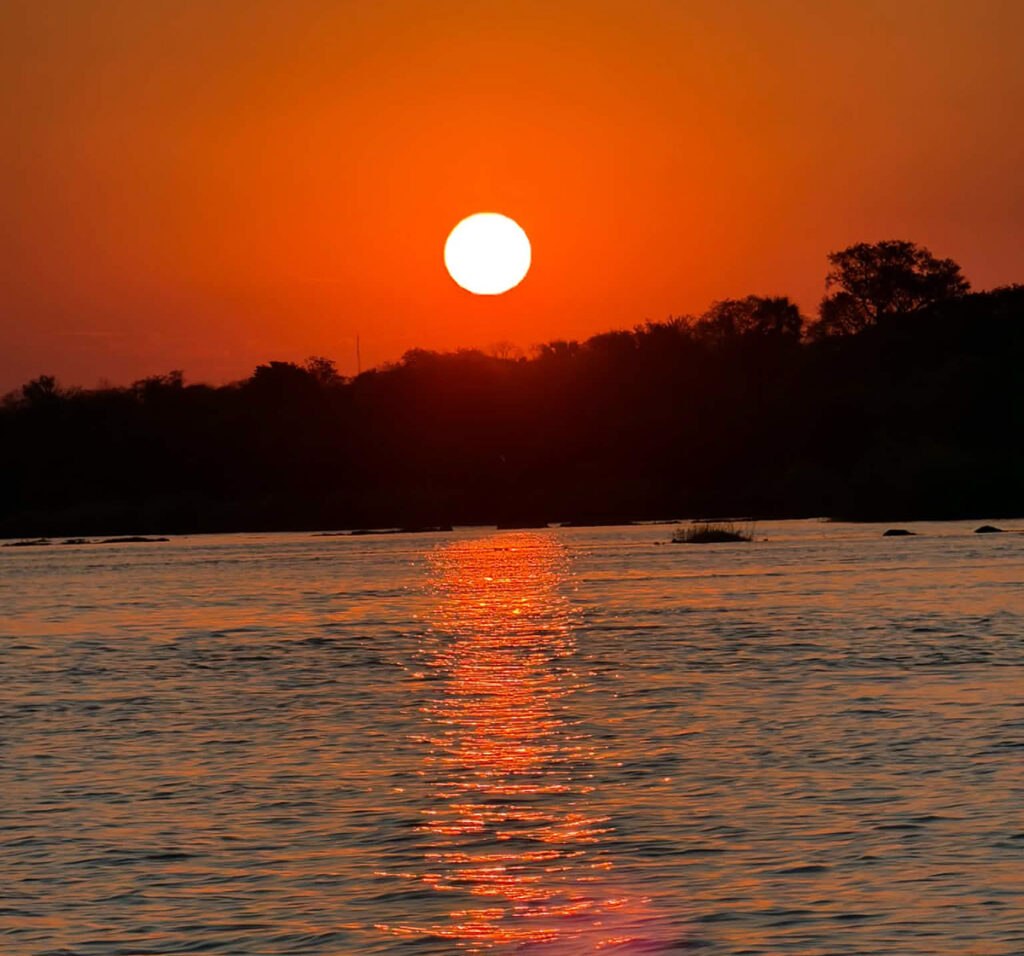
On our first night at Waterberry, we took a sunset river cruise, which turned out to be a metal motorboat that had seats for about ten people. We sailed out into the Zambesi, avoiding two big hippos, who talked to us the whole time and serenaded us both nights we were there. We approached a small island in the middle of the river. We found two elephants eating the vegetation. They had apparently swum over from the Zimbabwe side. We then sailed down stream and watched a family of baboons on the Zimbabwe side. There must have easily been two dozen or more of all ages. We laughed at the antics of the baby baboons who chased each other and teased the elders, often getting slapped down for one thing or another. We watched them climb high up into several trees where they were apparently settling in for the night.
When the sun had set, we crossed the river, barely skirting the hippos, who let us know they were not happy at how close we had come. Rising up in the river, they bellowed at us. Because of crocodiles and hippos, we were required to have a guard walk with us around the camp after dark. They drove us back to our tent both evenings after dinner. On the second evening, a hippo was grazing very close to our tent when we returned, although it quickly ran from the oncoming van.
We were glad we had an opportunity to visit Victoria Falls and sail on the Zambesi River. We learned a lot of history of the region and met some interesting people. However, we agreed that we would not have made a special trip to Zambia if we had not already been in South Africa.