Growing up near Niagara Falls, New York, I have always taken for granted that water sometimes creates a waterfall. It might even be massive, as the one on the Niagara river. But Karen and I heard tales of a waterfall that is over a mile across and higher than the one I know so well. It just happens to be near the confluence of the Iguazu and Parana rivers, where Brazil, Argentina and Paraguay all come together. The falls are found on the Brazilian and Argentinian sides of the Iguazu. More than three quarters of the falls are on the Argentinian side, with the Devil’s Throat the most spectacular. Along this river, which folds back on to itself where the falls exist, over one-hundred and forty river falls drop into the lower Iguazu creating a spectacular site that cannot be encompassed into a single photograph, except from the sky.
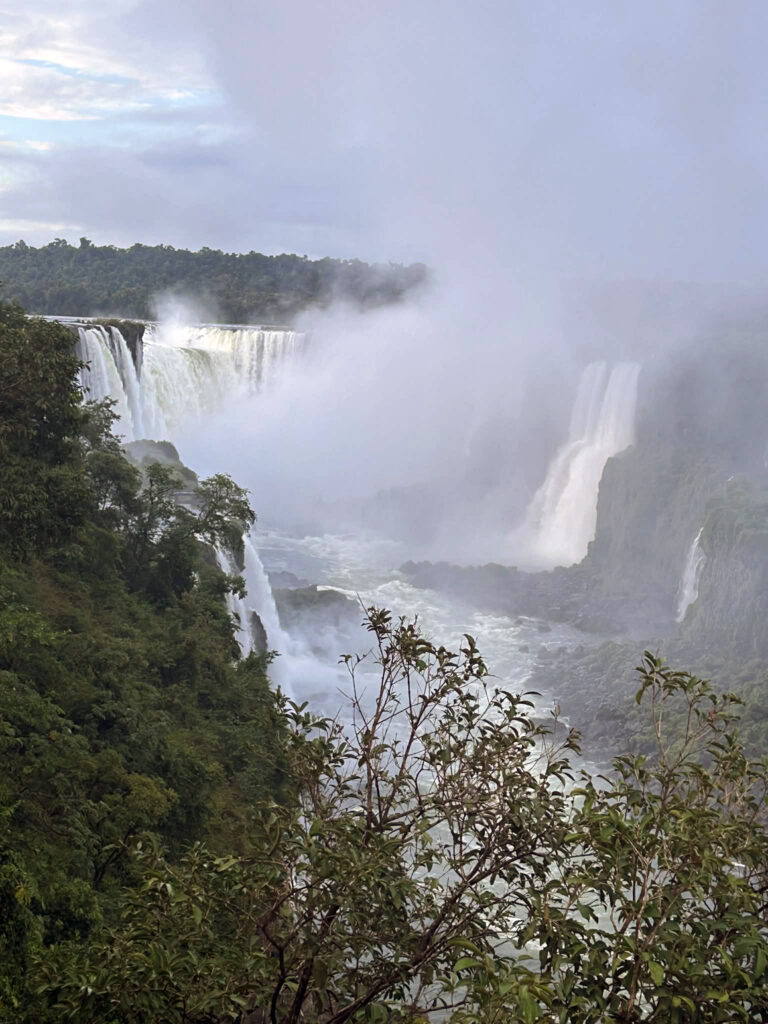
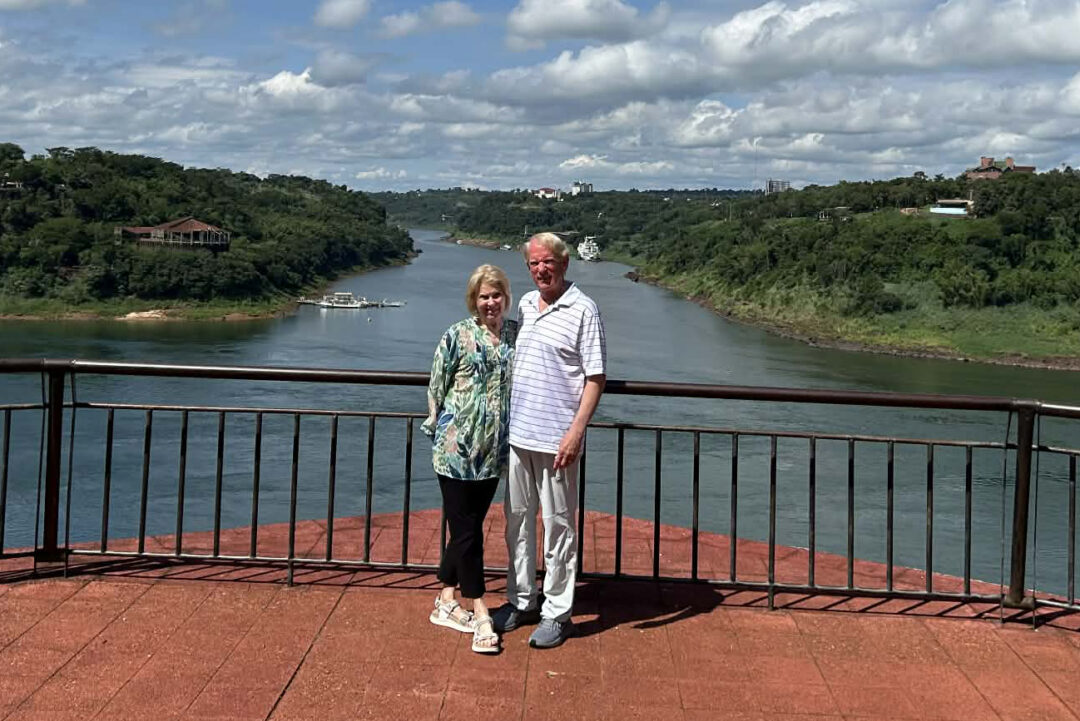
We hiked the falls on both sides and took the short, by distance, trip to visit the confluence of the Parana and Iguazu rivers, forming the intersection of the three countries. While not as spectacular as the falls area, it is an interesting trip to make as it takes more than an hour to get across the Brazilian-Paraguay Friendship Bridge, in both directions. What we learned about the culture, peoples and politics from our guide, Francis, more than made up for the long wait.
We stayed at the Belmond Hotel do Cataratus, literally across the street from the falls, deep in the Brazilian Iguazu National Forest. The Hotel was built between 1936 and 1958 in the Portuguese style of architecture. We discovered interesting wildlife such as monkeys, Jaguars, yellow breast Jays, Toucans, and Coatis, a relative of the racoon.

We asked for a wine tasting and were happy to learn we could sample four Brazilian wines, which are produced in small quantities and rarely found outside Brazil. We had heard they were not up to world class standards, but I am here to tell you that is no longer the case. In fact, I discovered that Central Market, in Texas, carries five wines, three of which are now in my refrigerator: the Larentis Merito 2021 Grand Reserve blend, Salton Intenso Brut Sparkling wine and Cantina Gelain Colonia No 44 2023 Rose.
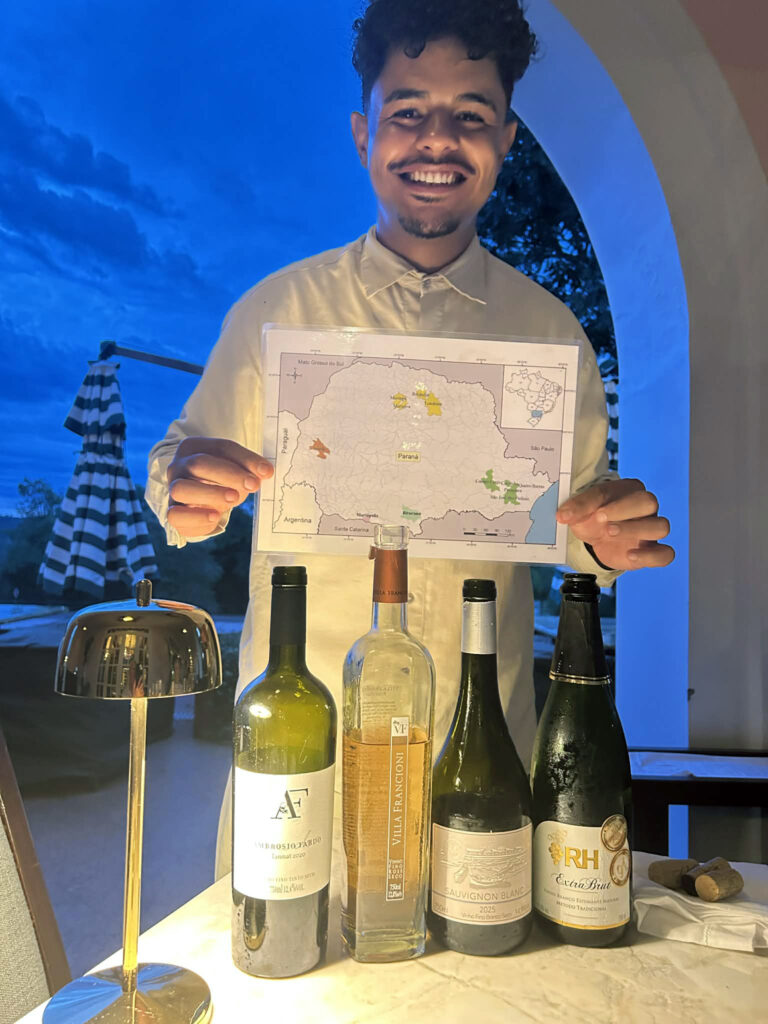
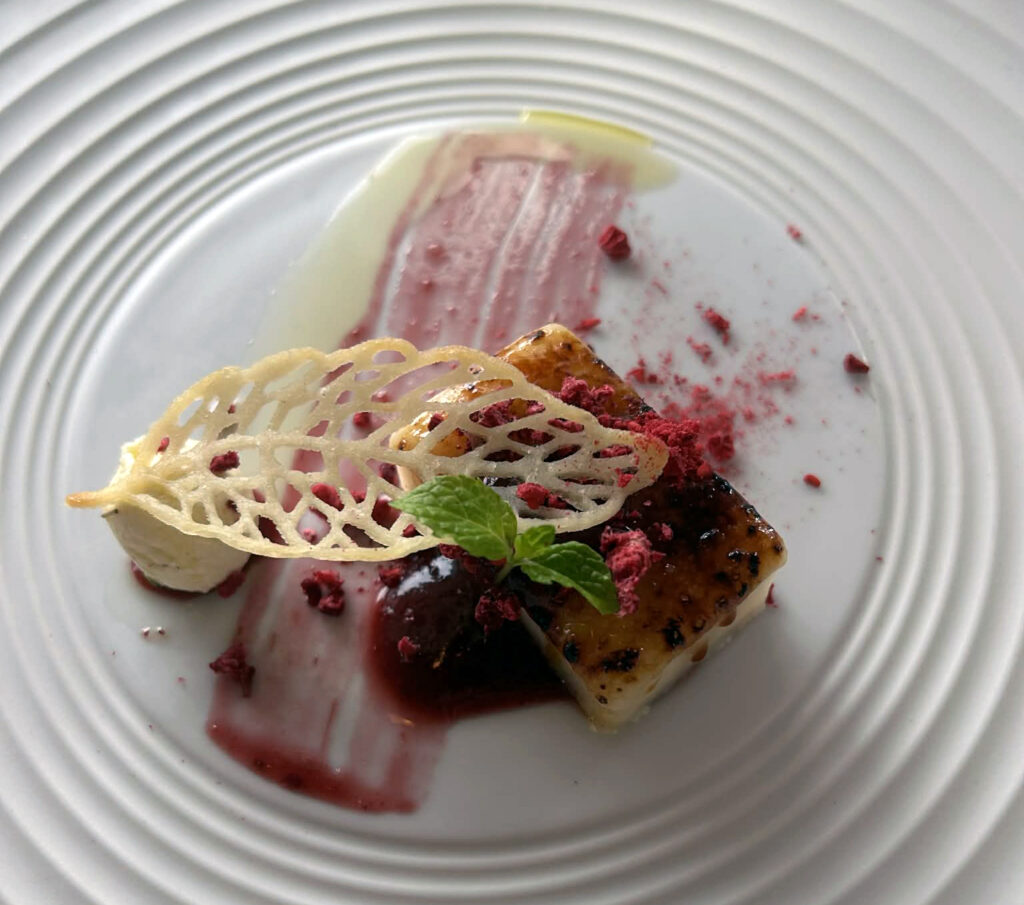
Lucas, our young wine steward, walked us through the growing areas, showing us a map of where they are and what is unique about the terroirs supporting each. The most notable wines included the sparkling RH Extra Brut, made from Chardonnay and Pinot Noir in the traditional method. It comes from the Parana region, which is where the hotel is located and was served with a goat cheese brulee with red fruit jam. The pairing brought out the best of both the wine and the goat cheese and fruit, making us realize Brazil has reached world class wine standards.
The second wine was Villaggio Basseti Sauvignon Blanc from Santa Catarina province, just south of the hotel. Crisp and flavorful, it was not as acidic it almost seemed like a more aggressive French Vouvray. It was served with a Plantain tartlet with pickled chili peppers, bringing out uniqueness of both the wine and dish.
Next Lucas discussed how the Villa Francioni Rose is a blend of seven different varietals, with Garnacha predominant. Also produced in Santa Catarina province, it was served with a shrimp pastry with apricot jam. With so many varietals and blend proportions to play with, it seemed difficult to compare to other roses we have liked, but it is an excellent pairing for sea food.
The final wine we sampled was a red, Fardo Casa Tannat, also from Parana, the same region as the sparkling wine, which I found unusual. Rarely have I discovered a good powerful red from a predominantly white grape growing region, indicating significant microclimate differences. It was served with a Wagyu beef shoulder over yucca puree. I found this delightful and thoroughly enjoyed the wine and especially the pairing. Tannat is generally thought of as a Uruguay varietal, although I found the Fardo to be better than many I have sampled.