Inyati means water buffalo in the local language. Curious for the name of the camp we chose to stay at since that was the one of the Big Five animals (lion, leopard, elephant, rhino and water buffalo) we saw the least of during our stay.
The camp is adjacent to the 6-million-acre Kruger National Park in the privately owned thirty-thousand-acre Sabi Sand Game Reserve. A number of camps are located in this reserve and we often saw other groups in Toyota Land Cruisers following various of the animals that move back and forth between Kruger and Sabi Sand. We also followed the eight-foot-tall electrical fences that keep the game in and poachers out.
There were six of us in our vehicle. Gabriel was our guide and Cliff our tracker. I was amazed at how knowledgeable Gabriel was about all kinds of things, not just the animals and the bush where we sought them out. Cliff spotted animals that none of us saw until Gabriel brought the vehicle right up to them. Gabriel and Cliff have worked together for about nine years, going out early morning and late afternoon for three hours each time, seeking out the animals.
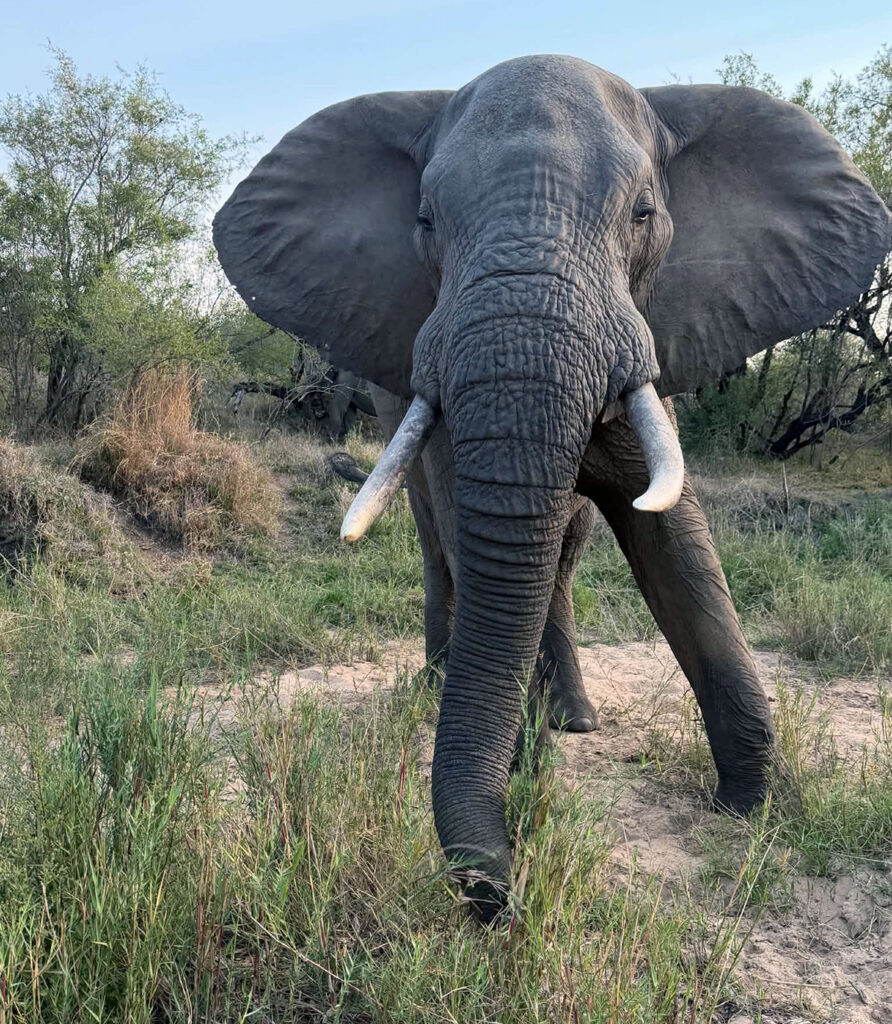
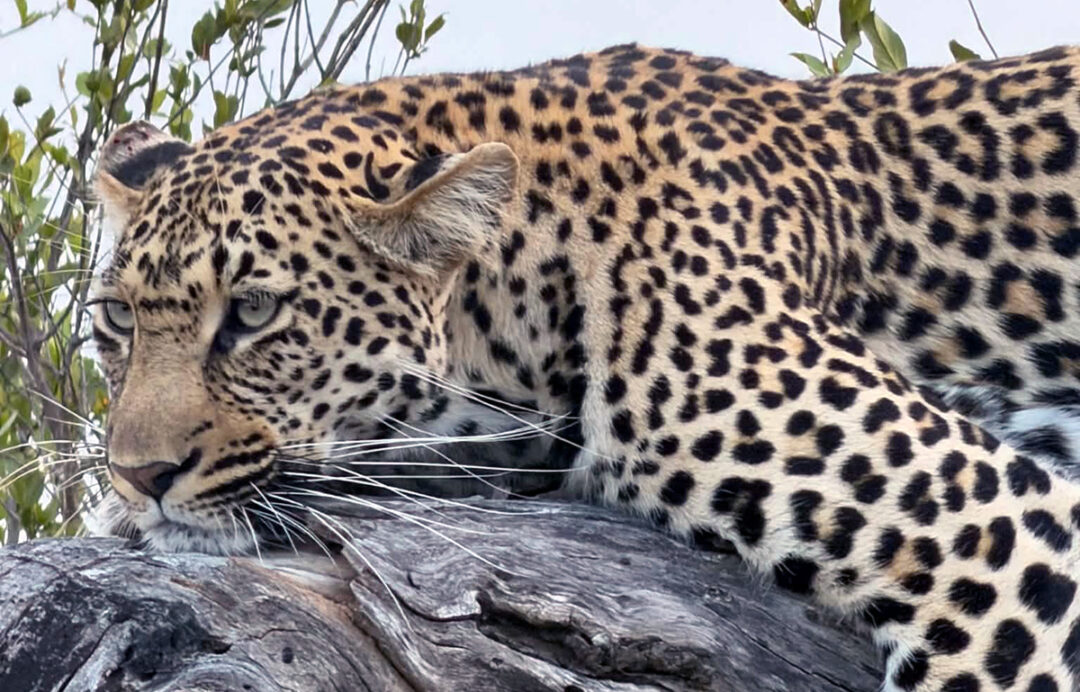
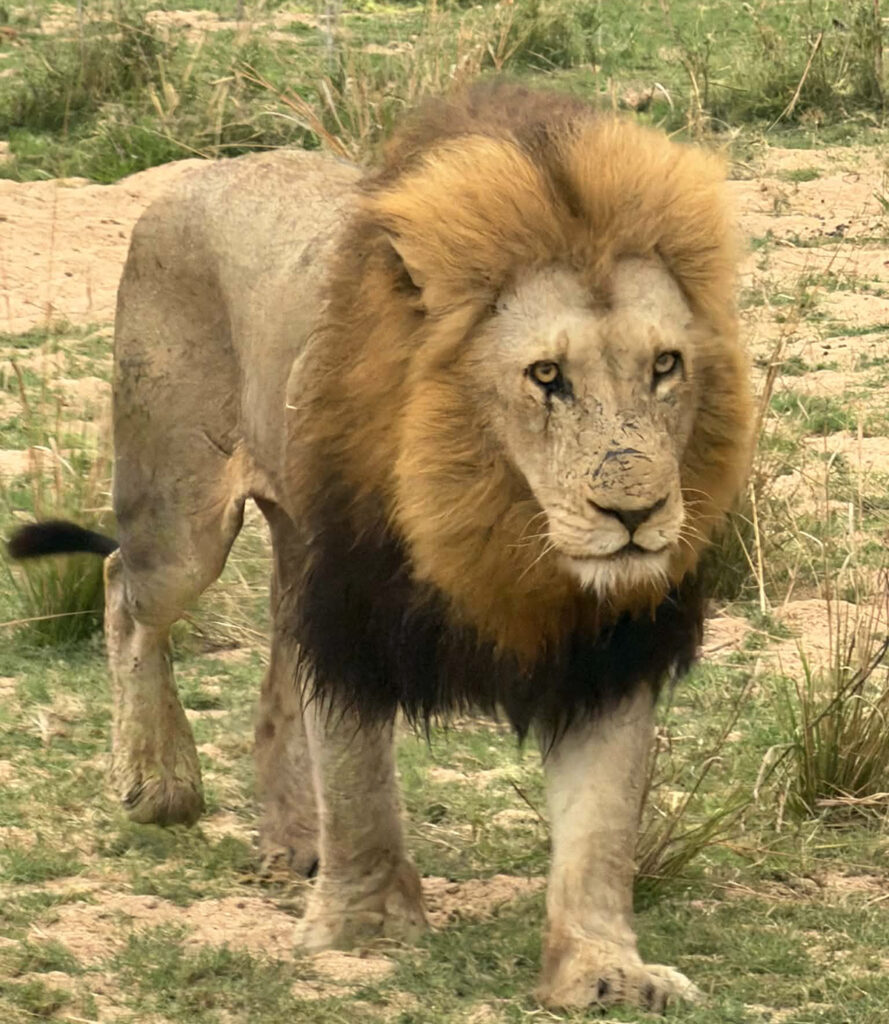
On more than one occasion I could have reached down and touched a male lion or female leopard. A massive bull elephant was about three feet from me at one point, just pulling up vegetation with his trunk to partially meet the four hundred pounds he would eat that day. At one point we realized he was eating wild Rosemary, apparently to spice things up. Gabriel mentioned studies show the males mentor the younger males and pass along knowledge of where to find food in lean times and water in droughts among many other things. Another study has shown that elephants communicate using very low frequency sounds humans cannot hear. Scientists are working to distinguish what the sounds mean in hopes of one day being able to communicate directly with elephants in their own language.
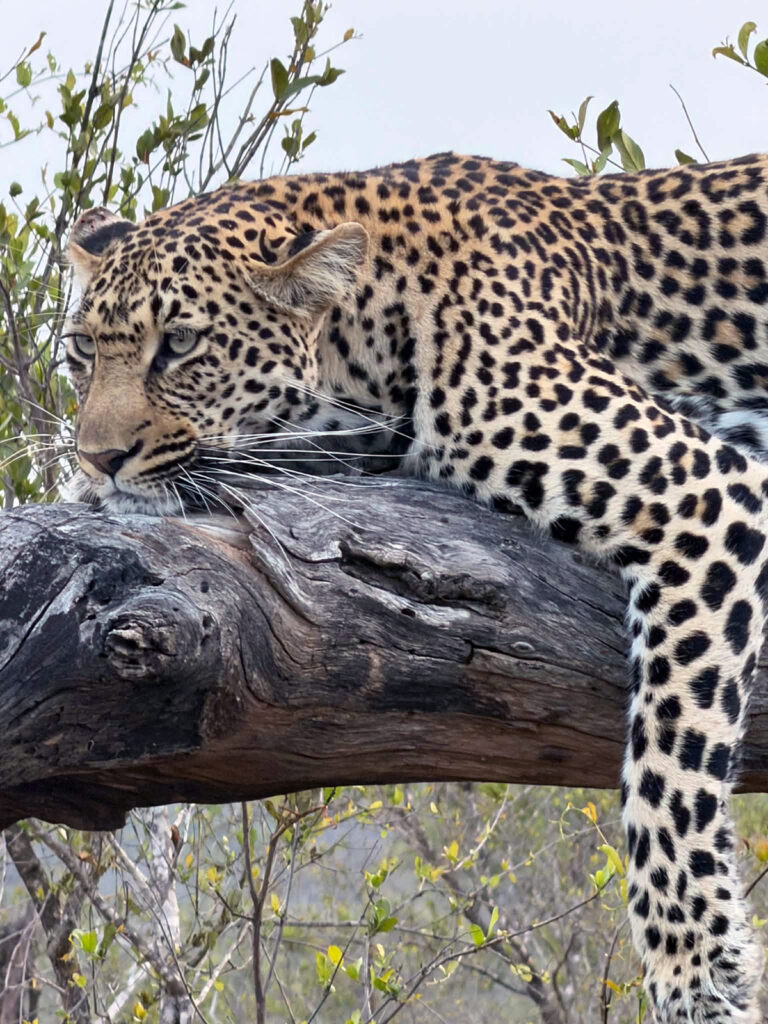
We watched a leopard chase down a mongoose and eat the head, but curiously not the rest of the body. We also watched a pack of wild dogs chase down a small antelope, tear it apart and share parts amongst themselves as hyenas waited to steal whatever the dogs did not consume.
We learned the Wild Dogs are the most aggressive and successful hunters with approximately a 90 percent success rate. The leopards and lions have only about a 30 percent success.
The primary prey are the antelopes and Impalas. But they are incredibly fast. So are the wild dogs who use up so much energy in their hunt they must catch something every day. The other predators can go several days without eating because they tend to eat larger animals they catch and share with smaller families. The wild dog pack we followed had nine members, although some have been seen to have as many as fifty. The lion family we tracked had two cubs, two lionesses and one lion.
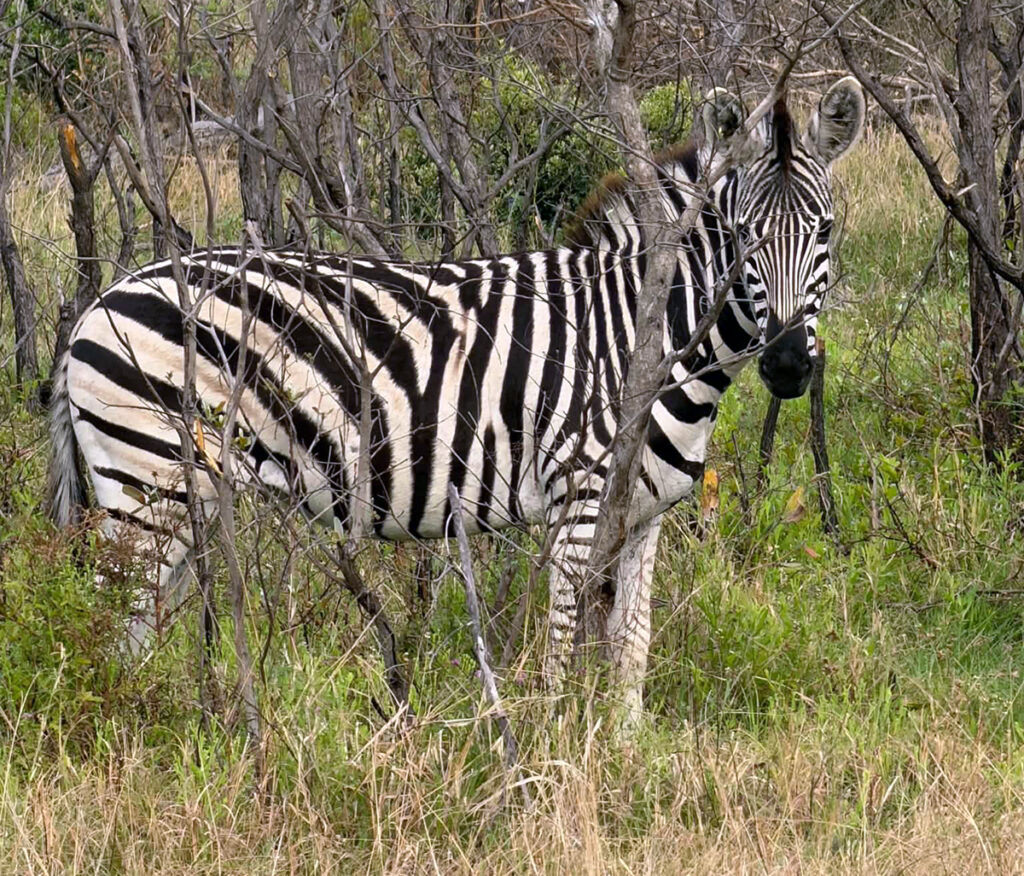
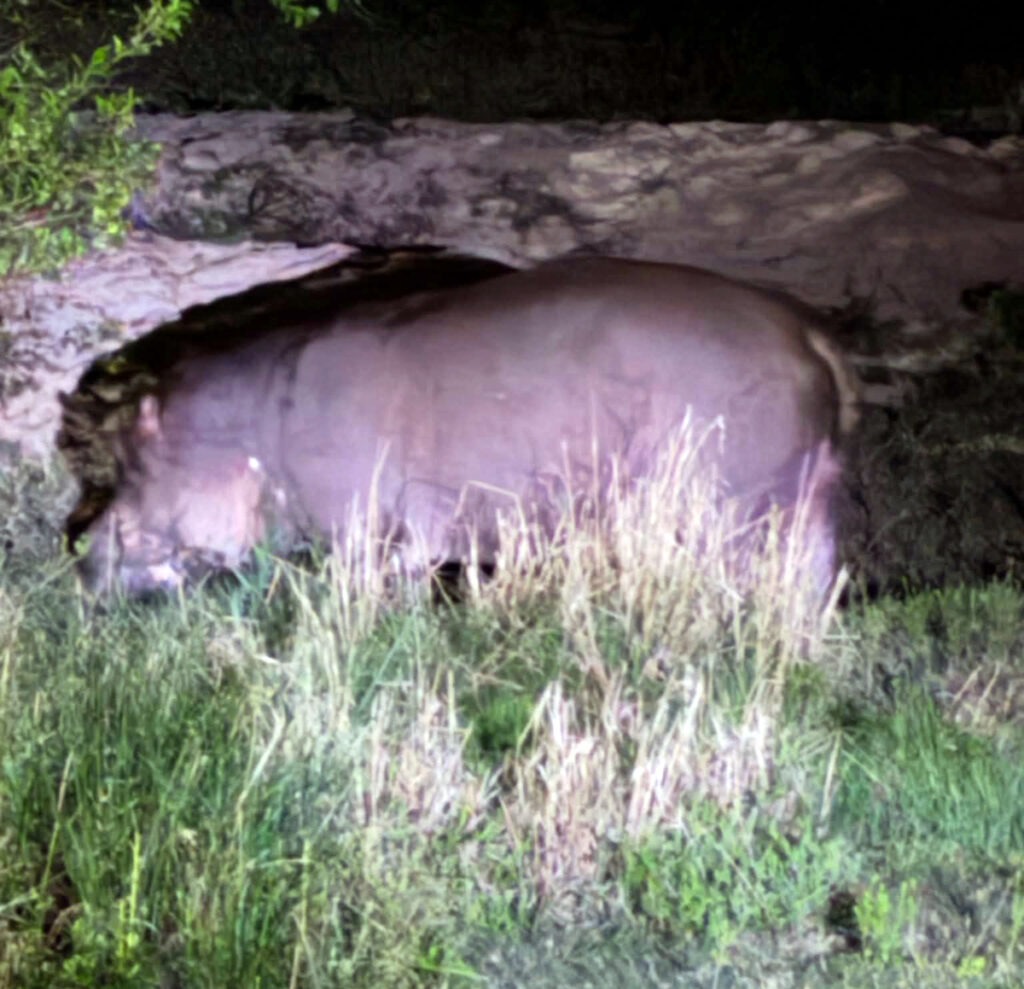
We saw hippos, white rhinos, giraffes, wildebeests, and multiple elephant families. Gabriel pointed out a wide variety of birds, guinea fowl, storks, crocodiles, and massive termite mounds the cats in particular liked to rest upon serving as a perch to see animals at some distance.
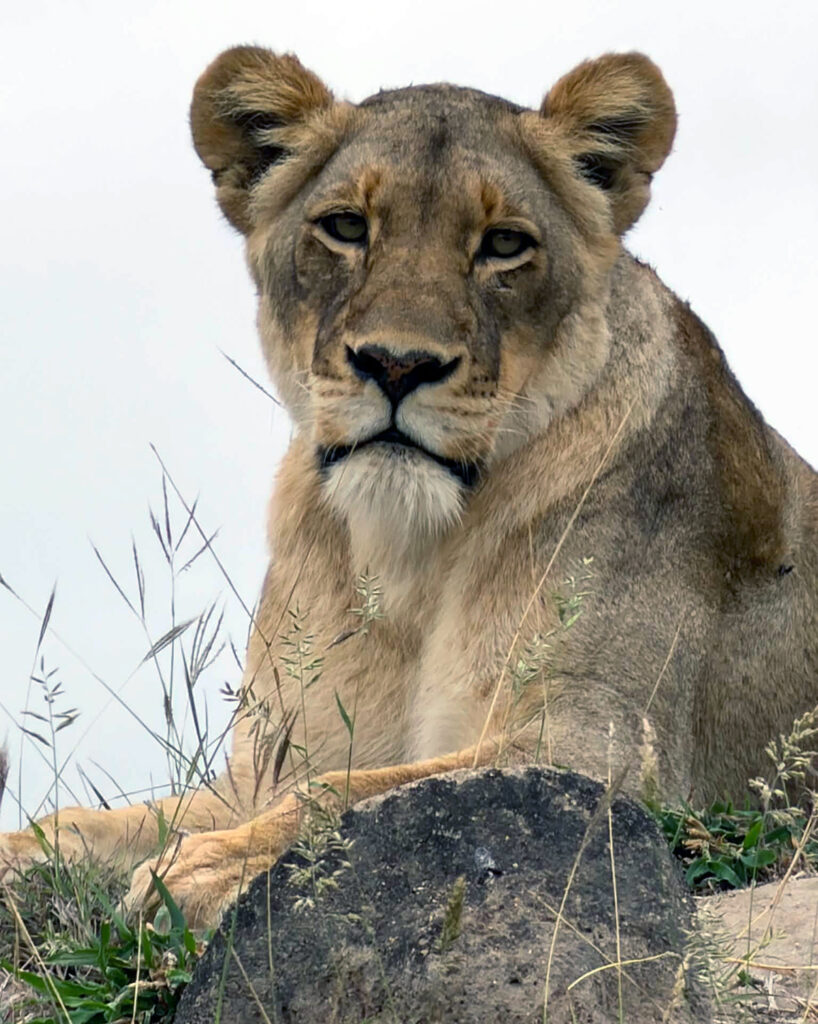
We were surprised that at Inyati we were able to get so close to the animals. Others in our vehicle talked about how in Kruger National Park they only were able to travel on the defined roads. Here we often went off road to track animals we had not yet seen.
Gabriel talked about all kinds of things he had learned in tracking animals, but also from the extensive reading he does. At one point we discussed how bright Venus was in the night sky, the various southern hemisphere constellations and whether Pluto was likely really a planet or just accumulated space rocks. He also told us other trackers revealed that if a crocodile grabs a leg or arm, the best thing to do is not panic, but push a free hand down its throat and push open the flap that keeps water from filling its stomach. When it releases you, do a Michael Phelps despite your bleeding arm or leg, but do not stop at the shore. Crocodiles have been known to chase people even out of the water.
When we started discussing this trip, we had no idea what we were getting into. Many camps put you in tents. We had a permanent bungalow with both indoor and outdoor showers right next to the two dining areas, with one covered for inclement weather, which Gabriel mentioned they had added just the week before we arrived. In fact, we learned that in the spring they often have floods in the various dry rivers we drove, even sometimes making entry to the camp impossible until the waters recede. While we were there, it was very dry, with one exception where Gabriel pulled out ponchos for us and we kept on stalking our camera prey.
An unforgettable adventure.